Cooking for one person is an underrated skill. The trick is to stop thinking of it as a sm
Cooking for one person is an underrated skill. The trick is to stop thinking of it as a smaller version of cooking for four and start treating it as something else entirely: a short conversation with yourself at the end of the day. One pan, one plate, one glass of something cold. The food does not need to impress anyone, which is freeing. Some of my best meals have been eaten standing by the stove, and I have no regrets about any of them.
I have always wanted to take the train to the sea. Not a fast train, but a slow one, the kind that stops at small stations with names I cannot pronounce. Through the window the fields give way to hills, the hills to a river, and then, all at once, there is the sea, flat and bright to the horizon. I think about that journey often, especially on grey days. Perhaps the point is not the sea itself, but the willingness to go and see it.
The public library near my home has a reading room with tall windows and chairs that have clearly been sat in by a thousand people before me. I go there on rainy Saturdays with no plan except to sit and read whatever I find on the nearest shelf. There is a particular comfort in being surrounded by books you will never finish, in a room full of strangers doing the same quiet thing. Nobody talks, and yet it never feels lonely.
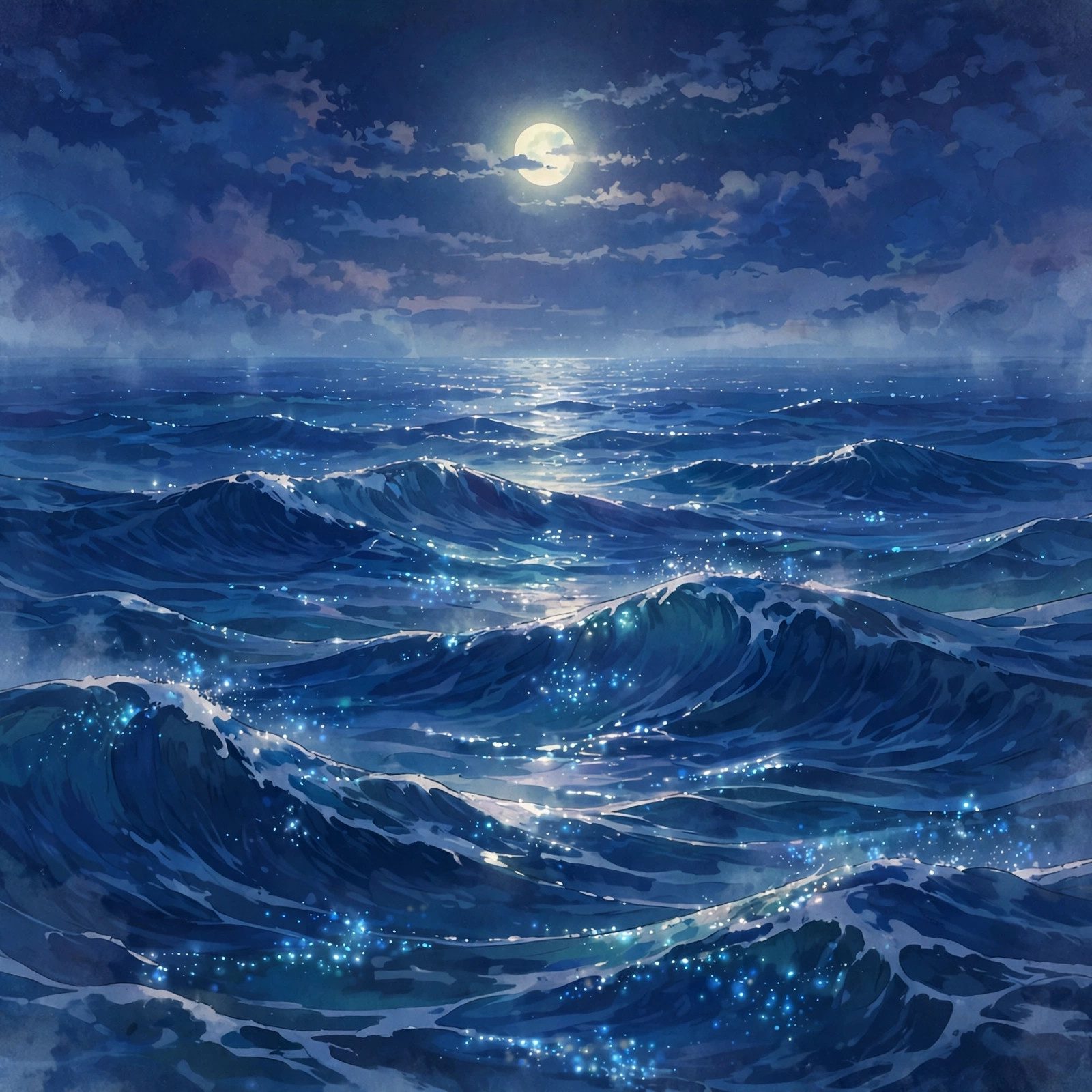
The sound of the sea is the sound I go back to whenever my mind feels crowded. Even remembering it helps: the steady wash of water, the gulls, the wind moving through the grass on the dunes. I close my eyes on a busy afternoon and I am there again, standing barefoot on the sand, with nowhere to be and nothing to prove. The sea does not ask anything of you, which is why it gives so much.
Every city has a quiet corner if you know where to look. Mine is a small park two streets from home, where old men play chess under a camphor tree and nobody checks the time. I go there when my head feels crowded, sit on the same bench, and watch the light move through the leaves. Nothing important happens there, and that is exactly the point. In a world that keeps asking us to hurry, a place that asks nothing of you is a small miracle.
Slowing down was not a decision I made once; it is a habit I practise every day. I put the phone in another room while I eat. I walk the long way home when the weather is good. I read one chapter instead of scrolling through a hundred posts. At first it felt strange, as if I were falling behind. Then I noticed something: the days grew longer, not shorter. When you pay attention, even an ordinary Tuesday has texture.
Learning to play the piano as an adult is an exercise in humility. My fingers are slow, my timing is worse, and the pieces I love most are years away from my reach. And yet, every evening, I sit down and play my scales, and once in a while, for a few bars, it sounds like music. That small moment is worth all the wrong notes. Being bad at something is not a reason to stop; it is the only honest way to begin.
There is a particular pleasure in making tea and opening an old book. The tea is never fancy, just leaves and hot water, but the ritual matters. The book falls open at a page I have read before, and the words feel both familiar and new, like meeting an old friend after a long time. Outside the window the afternoon light is turning gold. I read a few pages, then simply sit, letting the story settle. Some afternoons ask for nothing more than this.
I found a box of old letters in the back of a drawer last weekend, written in a hand I barely recognised as my own. They were full of plans I had forgotten making, worries that never came true, and small joys I had somehow let slip away. Reading them felt like meeting a younger version of myself and finding him braver than I remembered. I kept three of them and threw the rest away, but not before writing down the one sentence that mattered most.